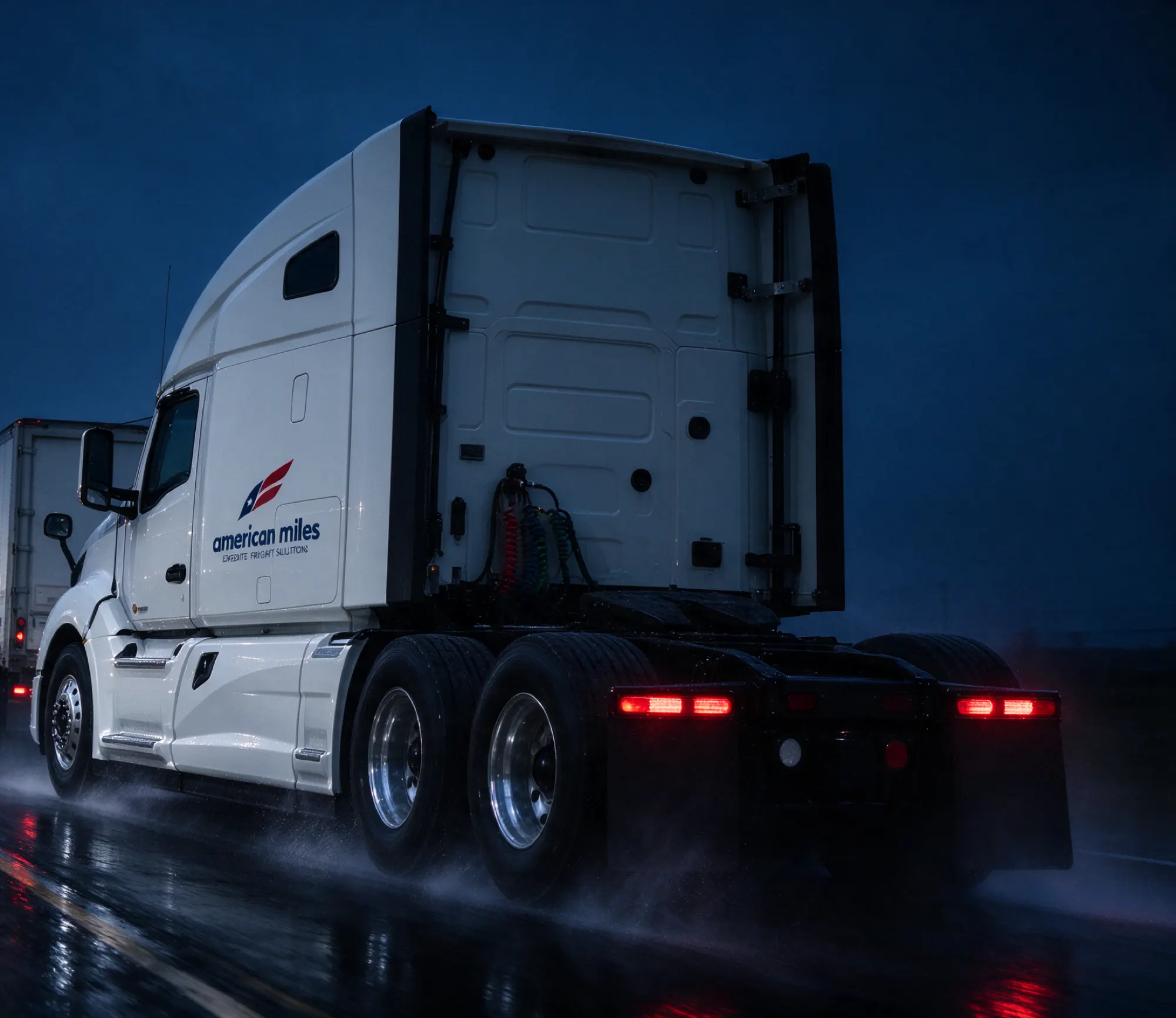
A private fleet is a fleet of trucks a shipper owns or leases and runs itself, with its own drivers. A dedicated fleet is trucks and drivers a carrier assigns to one shipper's freight, on that shipper's lanes and schedule.
A private fleet gives you control, but also every cost that comes with trucks: equipment, drivers, insurance, maintenance, compliance and fuel. A dedicated fleet gives you the same control over capacity and schedule, while the carrier carries the rest. For most shippers, the fixed costs and management burden of owning trucks outweigh the benefits.
What does owning a fleet involve?
Trucking costs are at record highs. The American Transportation Research Institute found that operating costs excluding fuel reached $1.85 per mile in 2026, the highest in 18 years of tracking (Transport Topics). Diesel averaged about $6.18 a gallon in mid-October (Trinity Logistics).
| Cost or task | Private fleet (you own it) | Dedicated fleet (American Miles) |
|---|---|---|
| Tractors and trailers | You buy or lease them | Carrier provides them |
| Drivers | You recruit, hire, pay and retain | Carrier staffs the trucks |
| Insurance and claims | Your policy, your risk | Carrier's coverage |
| Maintenance and repairs | Your shop or vendors | Carrier handles it |
| DOT and FMCSA compliance | Your safety program | Carrier's responsibility |
| Dispatch and after-hours support | Your staff | 24/7 carrier dispatch |
| Capacity on your lanes | Guaranteed | Guaranteed |
What costs are easy to miss?
The line items above are the obvious ones. Owning trucks also brings costs that rarely show up in the first budget:
- Empty miles. A private fleet that delivers outbound often runs home empty, and you pay for those miles too.
- Driver turnover. Recruiting, onboarding and training replacement drivers is a recurring cost, not a one-time one.
- Downtime. When a truck is in the shop, the freight still has to move, often on the spot market at a premium.
- Unused capacity. Trucks sized for your busiest weeks sit partly idle in the slow ones.
- Management time. Someone on your team has to run safety, compliance, maintenance and dispatch every day.
When does a private fleet make sense?
Owning trucks can work for companies with very high, stable volumes, specialized equipment needs and the in-house staff to run a transportation operation. For most shippers, though, the fixed costs and management burden outweigh the benefits.
Why is dedicated the middle ground?
Dedicated transportation gives you trucks and drivers assigned to your freight. You keep consistent service, familiar drivers and predictable capacity, but you avoid the capital outlay and the compliance headaches. It's also easier to scale up for peak season or down when volumes slow.
How do you compare the two?
Before you buy trucks, put both options side by side on the same lanes:
- Total cost per load or per mile, including equipment, insurance, maintenance, fuel, drivers and management time.
- Capacity guarantees: how many trucks and drivers are committed to your freight, and when.
- Service levels: on-time targets, tracking and who answers the phone after hours.
- Flexibility: how quickly capacity can grow for peak season or shrink when volumes slow.
- Contract length and exit terms, compared with the years you'd carry a truck loan or lease.
Is dedicated right for you?
Consider dedicated if you ship full truckloads on regular lanes, face tender rejections in tight markets, or have delivery windows you can't miss. American Miles has built private fleet solutions for shippers like these since 2017. Talk to our team about a dedicated fleet.
Are you a CDL-A driver? American Miles is hiring team drivers. See the open jobs.